
Our Cities Are Breaking. Period.
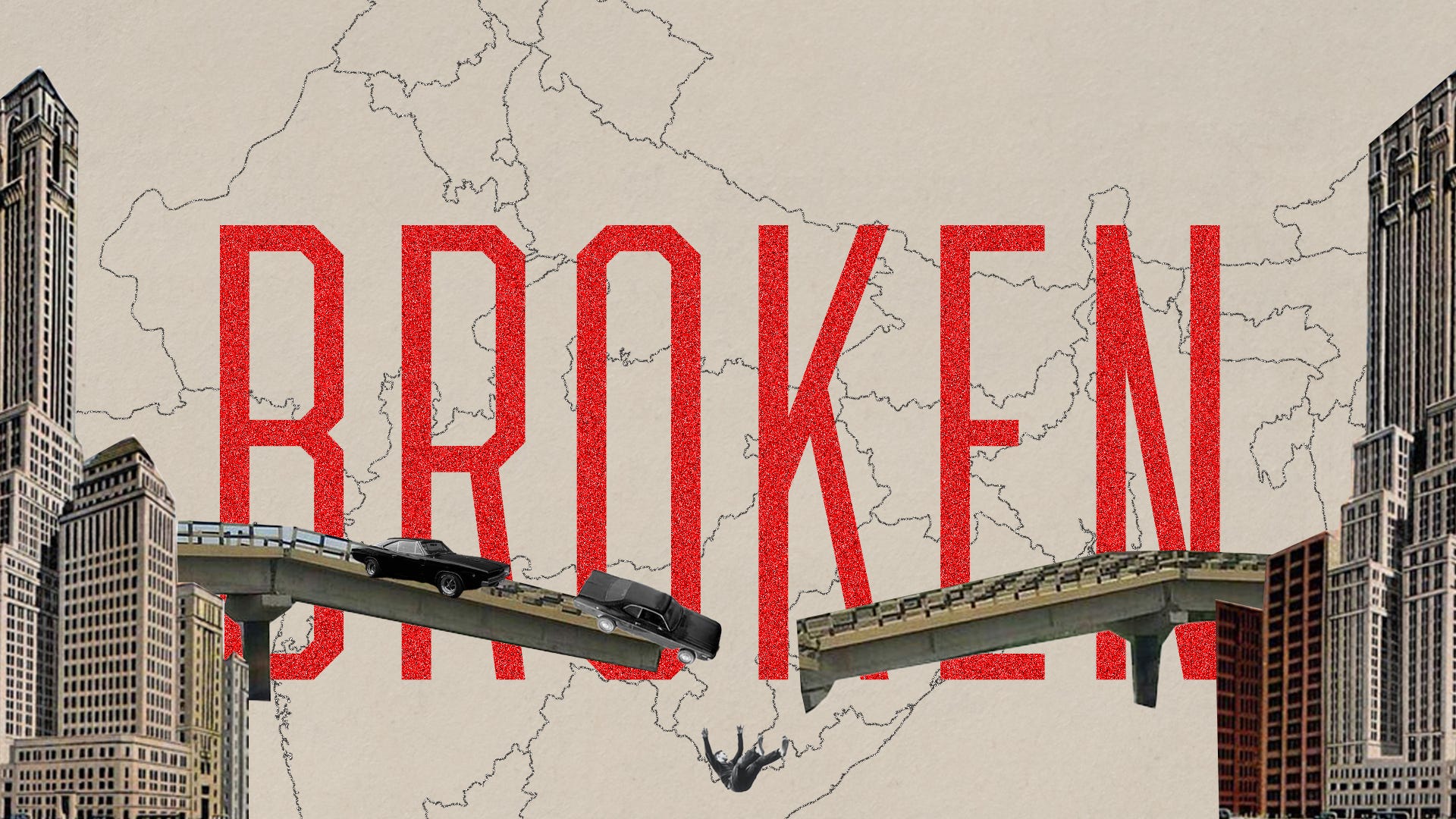
THE BRUTAL TRUTH
India's infrastructure is collapsing faster than it can be built. With 600 million people set to live in cities by 2036, we're racing toward an urban catastrophe that could derail the world's most populous democracy.
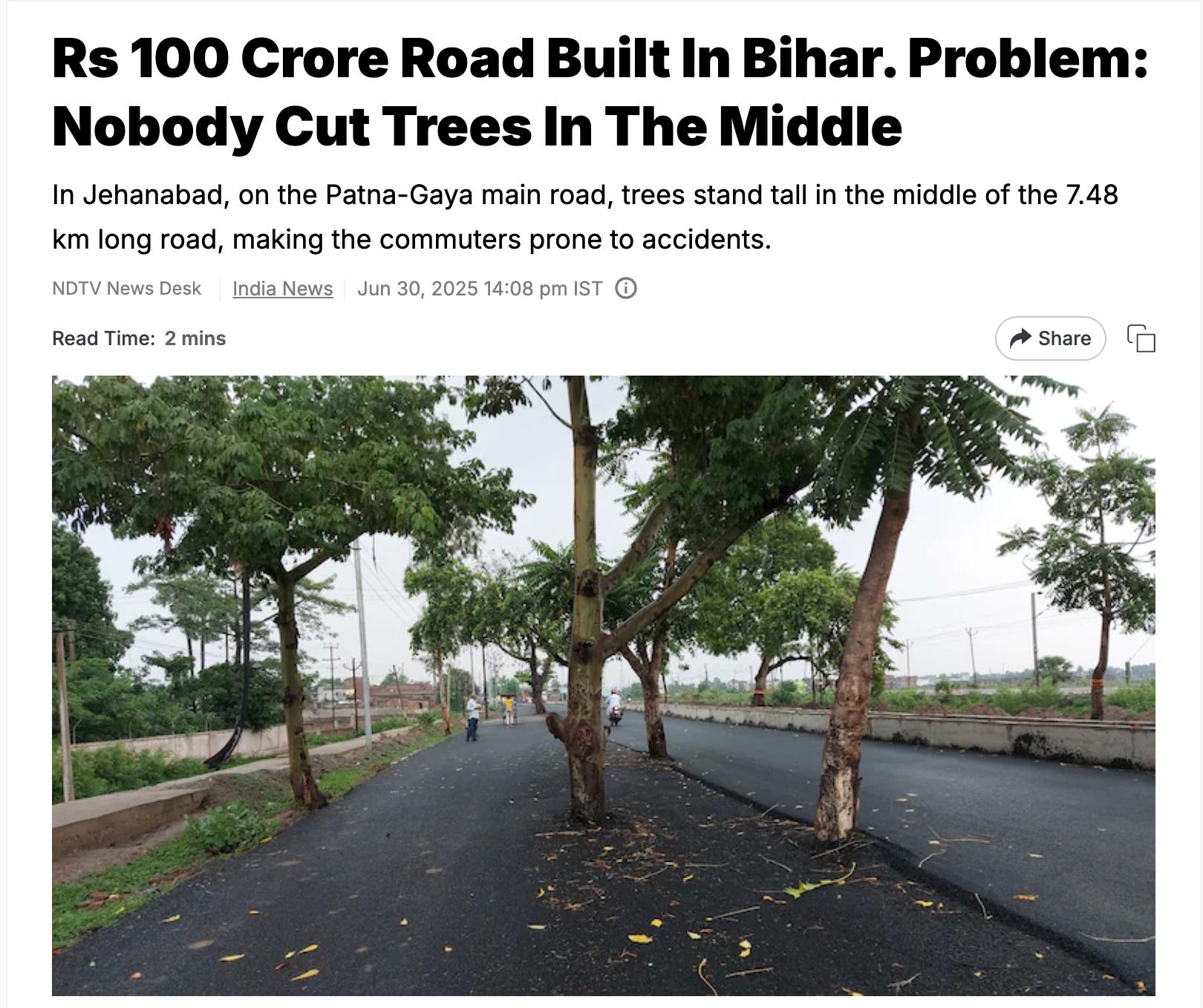
It started as a comedy. A ₹100 crore highway in Bihar with trees planted squarely in the middle of the road. Drivers dodging foliage at highway speeds. Social media had a field day.
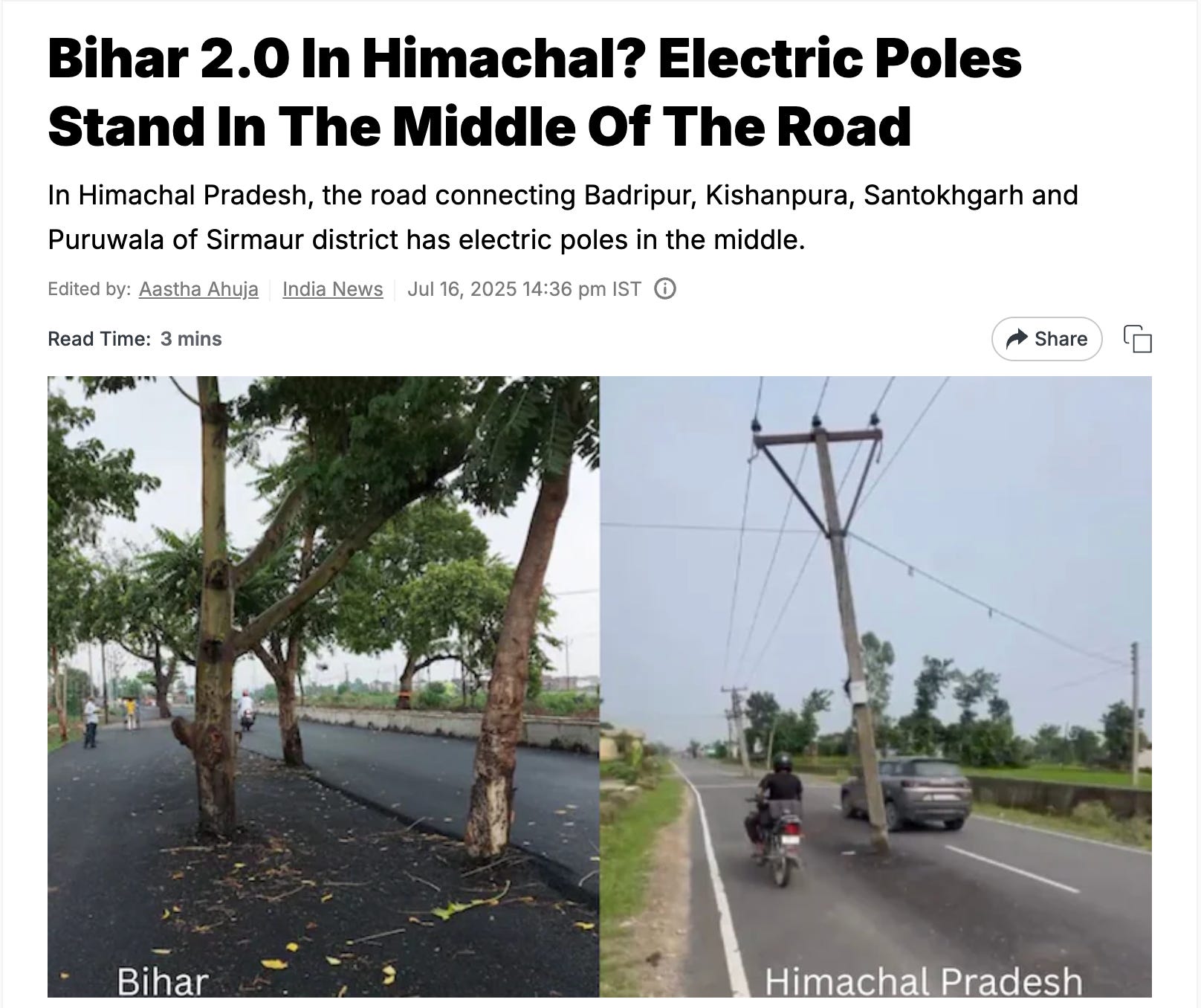
Then came the punchline from Himachal Pradesh....electricity poles erected in the center of newly constructed roads. "Tourist attractions," locals joked.
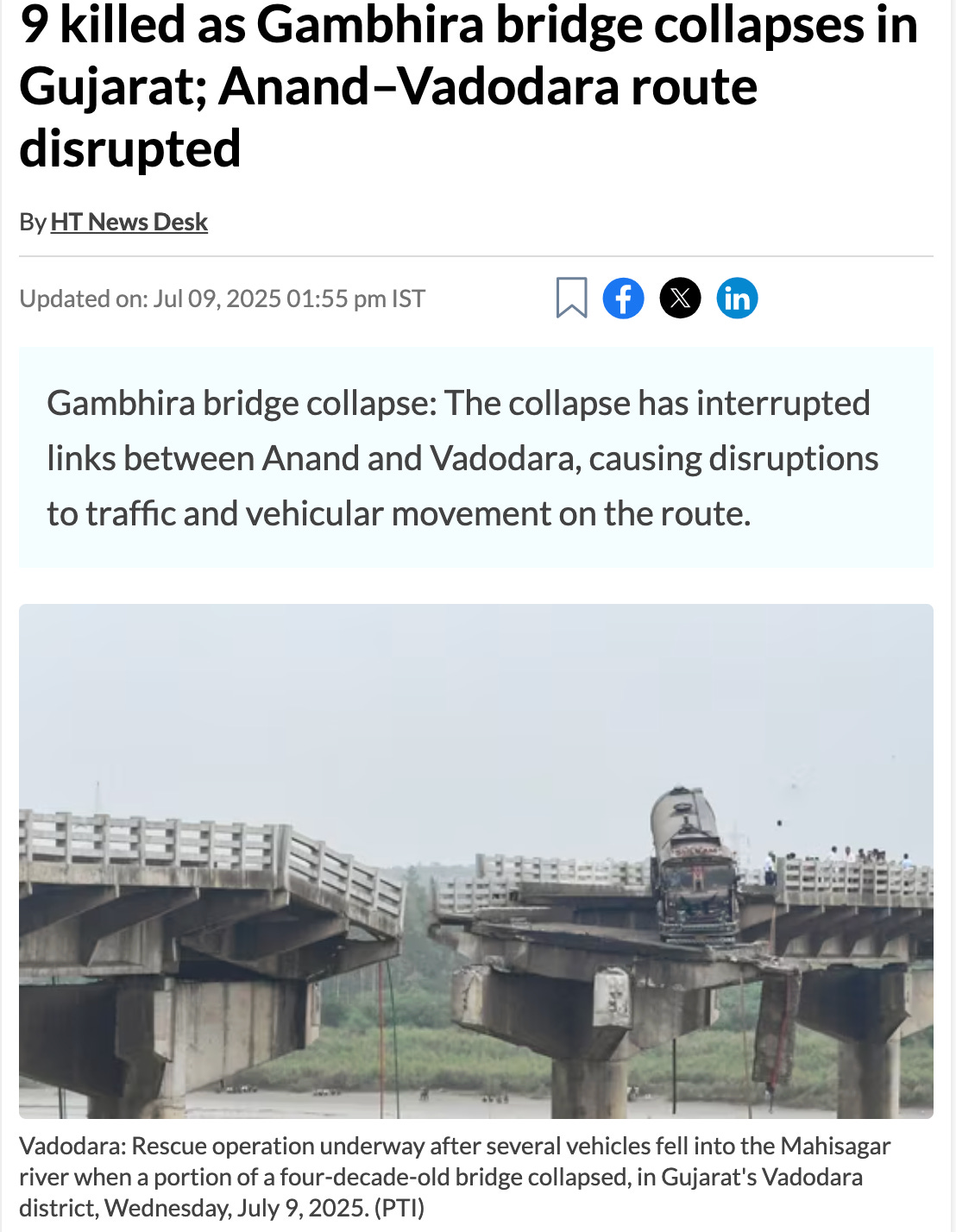
The laughter died in July 2025. Gujarat's Gambhira Bridge crumbled into the Mahisagar River, swallowing vehicles and claiming nine lives. Three weeks earlier, a tourist bridge in Maharashtra had collapsed, killing four. The comedy became a tragedy.
THE NORMALIZATION OF CHAOS
"Yaar, India hai na." (Well, it's India after all.)
The default response to infrastructure failures that have become so routine, we've stopped being outraged.
Delhi commuters waste 11 full days annually sitting in traffic jams.
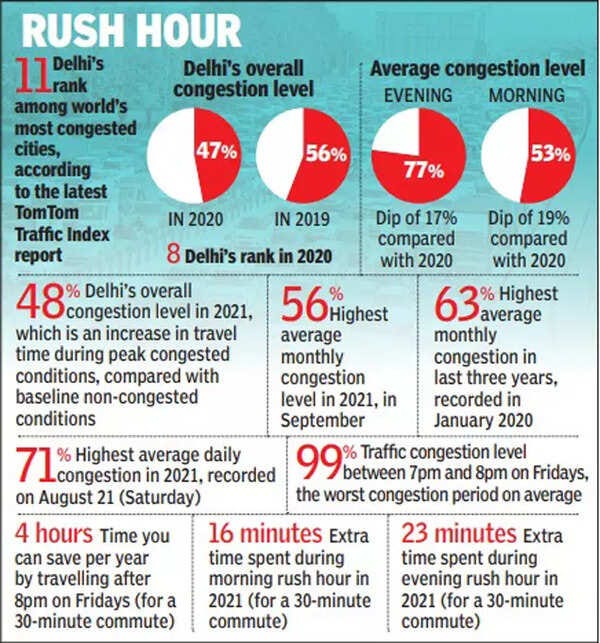
A single 30-minute gridlock traps 200,000 vehicles and burns 100,000+ man-hours daily. Mumbai's monsoon floods luxury cars in billionaire neighborhoods. Bangalore's IT corridor turns into Venice every rainy season.
Yet we've normalized this dysfunction. The middle class retreats into private solutions....generators for power cuts, water tankers for shortages, private security for safety. This "cave mentality" removes pressure for public infrastructure improvement, creating a vicious cycle of neglect.
The Economic Reality Check: India's broken cities generate 60% of national GDP on just 3% of land. Mumbai alone contributes more than entire states. The potential is staggering....but the infrastructure is crumbling.
THE COMING STORM: 600 Million by 2036
THE NUMBERS THAT SHOULD TERRIFY US
Current (2025): 37% urban population, infrastructure failing at current load
Projection (2036): 600 million Indians in cities - more than Europe's entire population
Stakes (2047): Centenary of independence, vision of developed nation
In just 11 years, urban India will house 600 million people. That's adding the equivalent of the entire European Union to cities that already can't handle current populations.
Timeline of Crisis:
2025: Bridge collapses monthly, power grids fail every other day
2030: Four new megacities added to existing chaos
2036: 600 million people in dysfunctional urban systems
2047: Either transformed cities or urban disaster collection
Climate change amplifies the crisis. "Once in 50 years" floods now occur every 2-3 years. Drainage systems designed for historical patterns can't handle extreme weather.
How We Stack Against China
CHINA'S INFRASTRUCTURE MACHINE:
8% of GDP on infrastructure vs India's 5-6%
40,000 km high-speed rail vs India's 500 km semi-high-speed
₹116 per capita urban spending vs India's ₹17
Hospitals built in 10-12 days vs India's 2 years for one overpass
Central coordination = fast execution vs 15-department chaos
JAPAN'S MAINTENANCE PHILOSOPHY:
Japan just approved ₹14 lakh crore....not for new construction, but maintenance of existing infrastructure. Their philosophy: "Build once, maintain forever."
Our approach? "Build and forget." The result: infrastructure service life half of design specifications.
Why We Keep Failing
1. THE OWNERSHIP VACUUM
No Indian city has a single owner. Roads built by PWD, water supplied by municipal corporations, power from state boards, metro by separate agencies. Result: coordination nightmare.
Case study: Roads get repaired, next day another department digs them up for drainage. This isn't comedy....it's systematic failure.
2. POLITICAL SHORT-TERMISM
Politicians think in 5-year cycles. Infrastructure lasts 50 years. Ribbon cutting gets votes; maintenance is boring. Maintenance budgets literally disappear.
3. THE MIDDLE-CLASS CAVE MENTALITY
Those who can afford change opt out with private solutions. Without public pressure, politicians see no need for improvement. The poor lack voice, the rich don't care, the middle class isolates itself.
4. CORRUPTION AT SCALE
Recent ED investigations revealed ₹5 crore kickbacks in Delhi water projects. The World Bank estimates 45% of construction costs in developing countries are lost to corruption.
THE ₹11.21 LAKH CRORE QUESTION
BUDGET 2025-26 ALLOCATIONS:
The government has allocated a record ₹11.21 lakh crore for infrastructure in 2025-26....3.1% of GDP.
Key Allocations:
Urban Challenge Fund: ₹1 lakh crore for city development
Roads & Highways: ₹2.87 lakh crore
Maritime Development: ₹25,000 crore fund
Nuclear Energy Mission: ₹20,000 crore
Money isn't the primary problem....execution is. The World Bank estimates India needs $840 billion in urban infrastructure by 2036, averaging $55 billion annually.
The Smart Cities Irony: Traffic monitoring apps while basic pipes burst underground. It's like buying smartphones for homes without electricity.
THE HUMAN COST: Beyond Statistics
Every bridge collapse statistic represents families destroyed.
Between 2021 and 2025, 170 bridge collapses claimed 202 lives and injured 441 people. These aren't numbers....they're someone's father, sister, child who just wanted to get home safely.
Future Horror Scenario:
600 million people in dysfunctional cities
Bridges collapsing routinely
Contaminated water as standard
Every monsoon = urban flooding
World's largest collection of urban disasters
Solutions That Work
SINGLE POINT AUTHORITY
Every city needs one empowered mayor with full powers and accountability. No more 15-department blame game.
ZERO TOLERANCE FOR CORRUPTION
Real-time transaction monitoring, immediate dismissal, public project transparency. If a ₹5 Parle-G biscuit can have full traceability, why not ₹100 crore projects?
WATER FIRST STRATEGY
Fix water and sewage before anything else. Everything else depends on this foundation. Cities still running on 1950s drainage systems will keep drowning.
BREAK THE MIDDLE-CLASS CAVE
Make public services so good that private alternatives become unnecessary. Force accountability through quality, not escape routes.
Proof It's Possible
Ahmedabad BRT: Still serves 300,000+ daily riders efficiently through proper maintenance....proving good systems work when maintained.
Surat's Transformation: From plague city to cleanest city through systematic planning and consistent execution.
Pune Metro Phase I: Growing ridership proves good planning works with proper implementation.
The Chandigarh Model: Where infrastructure works, people walk more, use public spaces, invest in neighborhoods. Good infrastructure creates optimistic citizens.
THE ECONOMIC EXPLOSION WAITING TO HAPPEN
If Infrastructure Works:
Mumbai without gridlock = productivity explosion
Bangalore with 24/7 power = IT sector boom
Delhi with drinkable tap water = health cost reduction
Cities with pleasant walking = entrepreneurship increase
Reliable systems = global competitiveness without backup costs
Current Economic Damage:
Traffic congestion wastes 6% of GDP (Bangkok example)
Power outages cause 5-10% revenue loss to industries
Infrastructure failures force double budgeting (official + backup systems)
Foreign investment deterred by logistics nightmares
The Bottom Line: China will gladly remain the infrastructure vishwaguru while we debate ancient wisdom. But 600 million Indians deserve better than accepting "Yaar, India hai na" as an excuse for preventable tragedies.
The clock is ticking. The budget is allocated. The technology exists.
Now it's about political will and citizen pressure.