
We investigated this tech giant
And what we discovered will blow your mind

Right now, as you're reading this, ChatGPT is thinking on NVIDIA chips.
Tesla cars are seeing through NVIDIA eyes. That AI tool you used to write your last email? NVIDIA.
The robots serving your coffee in Tokyo? NVIDIA.
Every single piece of artificial intelligence you interact with in your daily life - from your phone's camera to Netflix recommendations - runs on technology controlled by one company.
NVIDIA
And here's the thing that'll blow your mind:
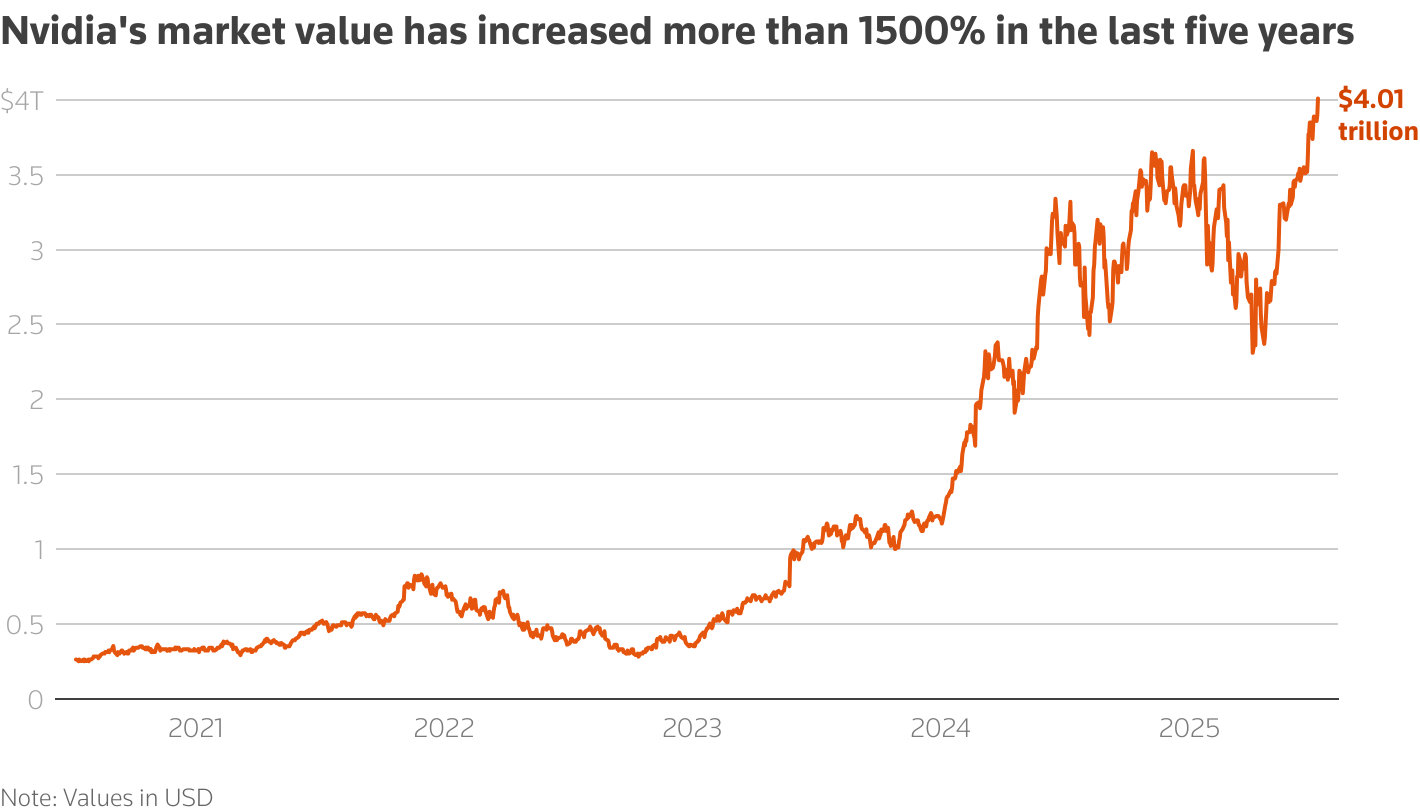
NVIDIA went from a $165 billion gaming graphics company to a $3.6 trillion AI empire in just four years.
That's more money than the entire GDP of Germany.
But wait, it gets crazier.
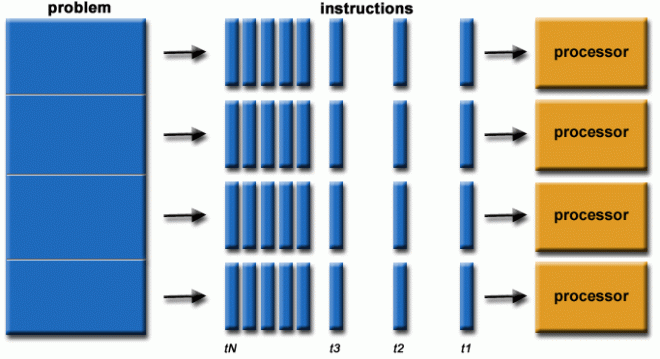
In 1993, three guys sitting in a California diner had this wild idea about parallel processing, when literally everyone else was doing things the old serial way. Their idea was to make better graphics cards for gamers.
Fast forward 30 years, and they accidentally became the most powerful company on Earth.
Be with me for next 10 min and I want to take you to the journey of How did a graphics card company accidentally end up controlling the future of humanity? And what happens if they're completely wrong about what's coming next?
History
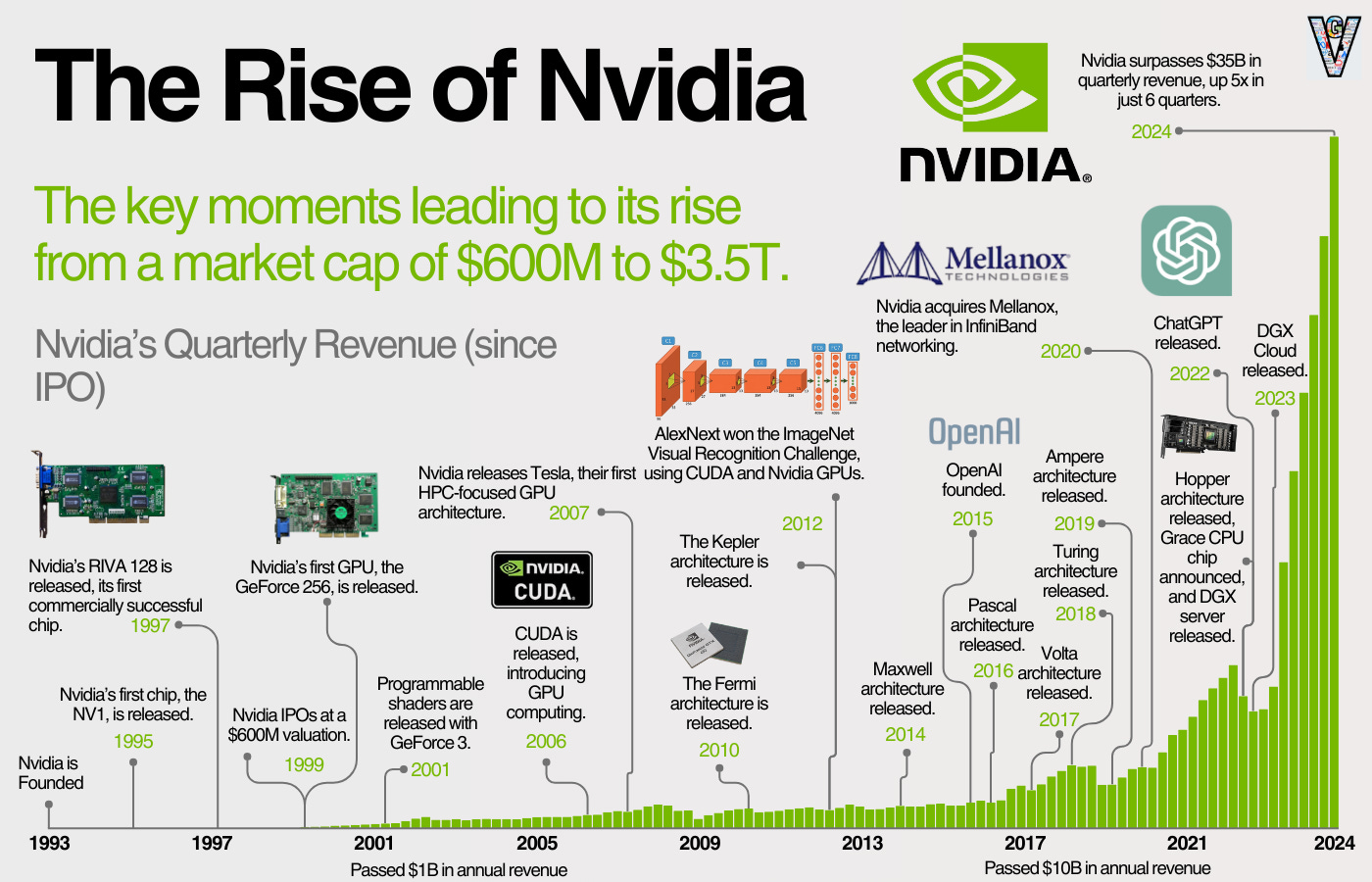
Let's go back to where this all started. April 5th, 1993. Sunnyvale, California.
Three engineers - Jensen Huang, Chris Malachowsky, and Curtis Priem - are sitting in a diner, probably drinking terrible coffee and stale pie, sketching out ideas on napkins.
Now, here's what makes this story fascinating. Everyone else in Silicon Valley was obsessed with making CPUs faster through what they called "serial processing" - basically doing one thing really, really well. But these three guys had this contrarian insight: what if instead of doing one thing perfectly, we did thousands of things pretty well at the same time?
It sounds obvious now, but in 1993, this was revolutionary thinking.
They realized that 10% of software code was responsible for 99% of the processing workload. So instead of making that 10% marginally faster, why not completely reimagine how we approach the other 90%?
Their first target? Gaming graphics. Because gamers were the only people crazy enough to pay premium prices for cutting-edge technology that didn't exist yet. Smart move.
In 1999, they launched what they called the "world's first GPU" - the GeForce 256.
And here's the kicker - they weren't just making graphics cards. They were building the foundation for parallel processing that would eventually power artificial intelligence.
They just didn't know it yet.
Jensen Huang used to tell people that graphics cards would eventually be used for way more than gaming. People thought he was nuts. Turns out, he was just 20 years ahead of everyone else.
CUDA Launch
2006 was when NVIDIA made the move that would change everything. They launched something called CUDA - Compute Unified Device Architecture.
Sounds boring, right? This might be the most important product launch in tech history that nobody talks about.
Here's what CUDA actually did: it turned graphics cards into general-purpose computing machines. Suddenly, scientists could use gaming hardware to run complex simulations. Financial firms could process massive datasets.
Researchers could model molecular dynamics.
But here's the genius part - NVIDIA didn't just sell hardware. They built an entire ecosystem. They went to universities and basically said, "Hey, here's free hardware, free training, free curriculum. Just teach your students our system."
They trained 35 million developers to only know NVIDIA's way of doing things. They created libraries, documentation, support systems. They made it so easy to use NVIDIA chips and so incredibly painful to switch to anything else.
This wasn't an accident. This was a deliberate platform strategy that would make Microsoft jealous. Once you learned CUDA, once you built your code on NVIDIA's system, switching to a competitor meant throwing away years of work and starting from scratch.
By 2012, NVIDIA had quietly built the most sticky technology platform in the world. Developers were locked in. Universities were locked in. Research institutions were locked in.
And then something happened that nobody saw coming.
AlexNet Breakthrough
A researcher named Alex Krizhevsky is working on something called AlexNet - a neural network for image recognition. He's using NVIDIA graphics cards because, well, they were cheap and powerful for the kind of parallel processing he needed.
His AI model wins the ImageNet competition by such a massive margin that it basically broke the entire computer science community. Suddenly, everyone realized that artificial intelligence wasn't some distant sci-fi dream - it was happening right now, and it was happening on NVIDIA chips.
This was the moment that kicked off the entire AI boom we're living through today. And NVIDIA? They were perfectly positioned because they'd spent 13 years building the infrastructure that made this accident possible.
Think about it - if NVIDIA hadn't been obsessed with parallel processing, if they hadn't built CUDA, if they hadn't trained millions of developers on their platform, the AI revolution might have looked completely different. We might all be using AMD chips right now. Or Intel. Or some Chinese company you've never heard of.
But because of a series of strategic decisions made by three guys in a diner, followed by 20 years of platform building, NVIDIA accidentally became the backbone of artificial intelligence.
Their revenue mix completely flipped overnight. Gaming went from being their main business to just 9% of their revenue. Data centers and AI acceleration went from a side project to 87% of their business.
From 2020 to 2024, their stock price increased by 19,100%. Let me put that in perspective: if you invested $1,000 in NVIDIA in 2020, you'd have $191,000 today. That's not a typo.
AI Chip Market Dominance
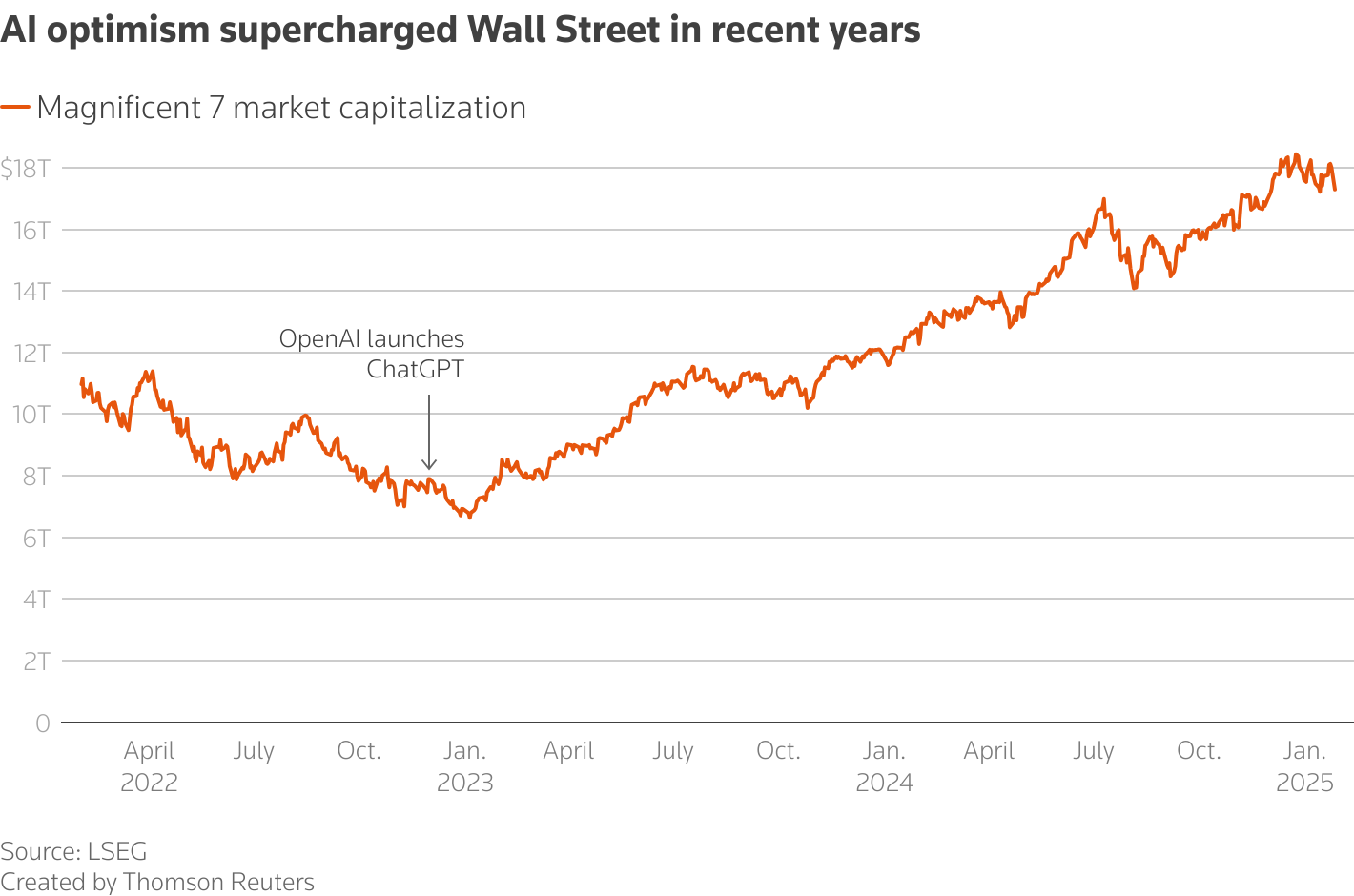
Here's where things get really interesting - and kind of scary. NVIDIA now controls 85-90% of the AI chip market. That's not just market dominance - that's basically a monopoly on the infrastructure that runs artificial intelligence.
Every major AI breakthrough you've heard about runs on NVIDIA chips. ChatGPT? NVIDIA. DALL-E? NVIDIA. Tesla's self-driving cars? NVIDIA. The AI that's probably going to automate your job? Also NVIDIA.
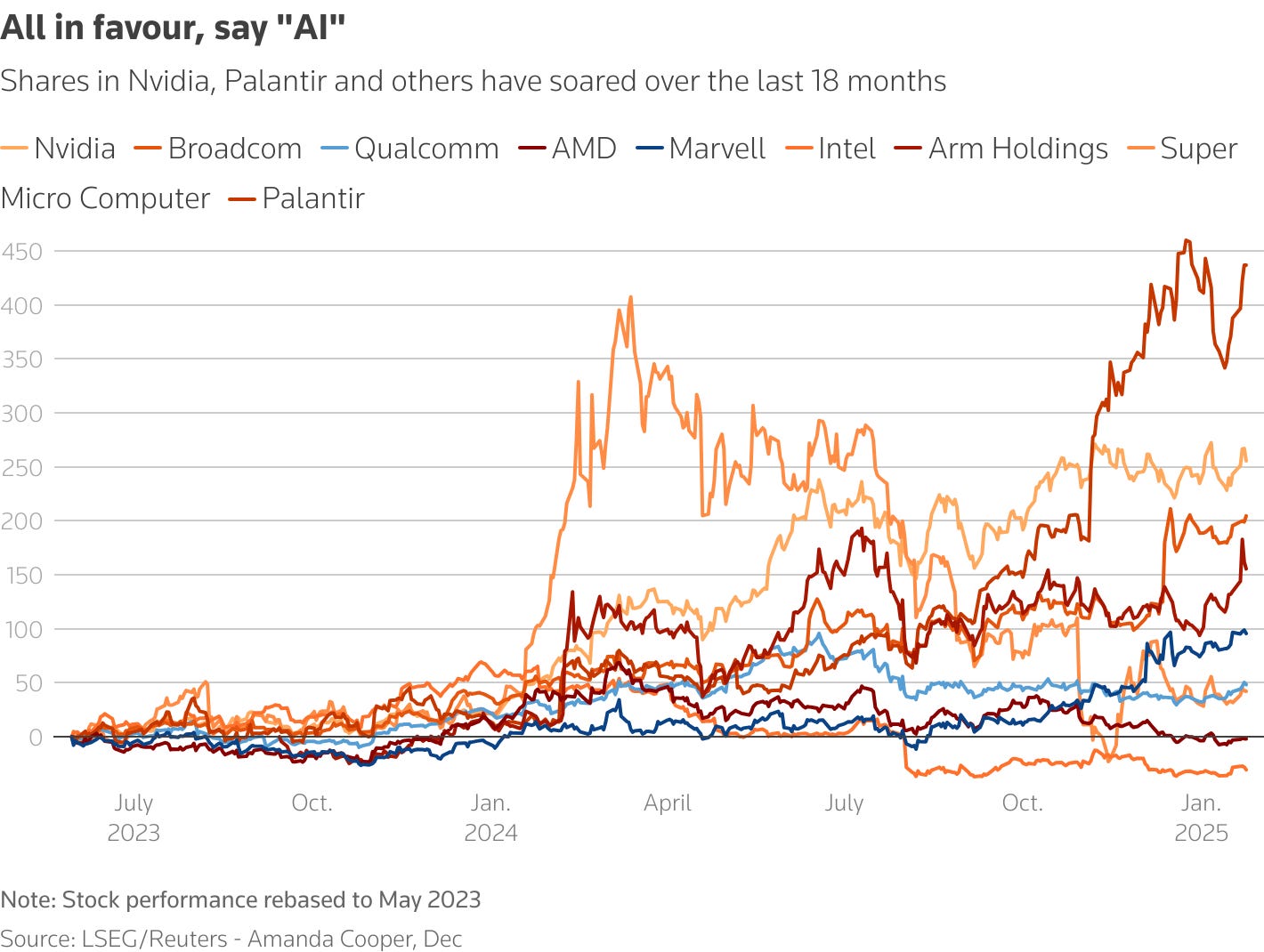
They made $130 billion in revenue last year. Their profit margin was $72 billion. That's more profit than most Fortune 500 companies make in total revenue.
But here's what keeps me up at night: we've created a single point of failure for the entire global AI infrastructure. If something happens to NVIDIA - if their chips get disrupted, if their manufacturing gets interrupted, if they make the wrong strategic decisions - the entire AI industry could crash with them.
And get this - almost all of NVIDIA's chips are manufactured in Taiwan. One island. One company. One potential geopolitical flashpoint. If anything happens to Taiwan, the global AI revolution basically stops.
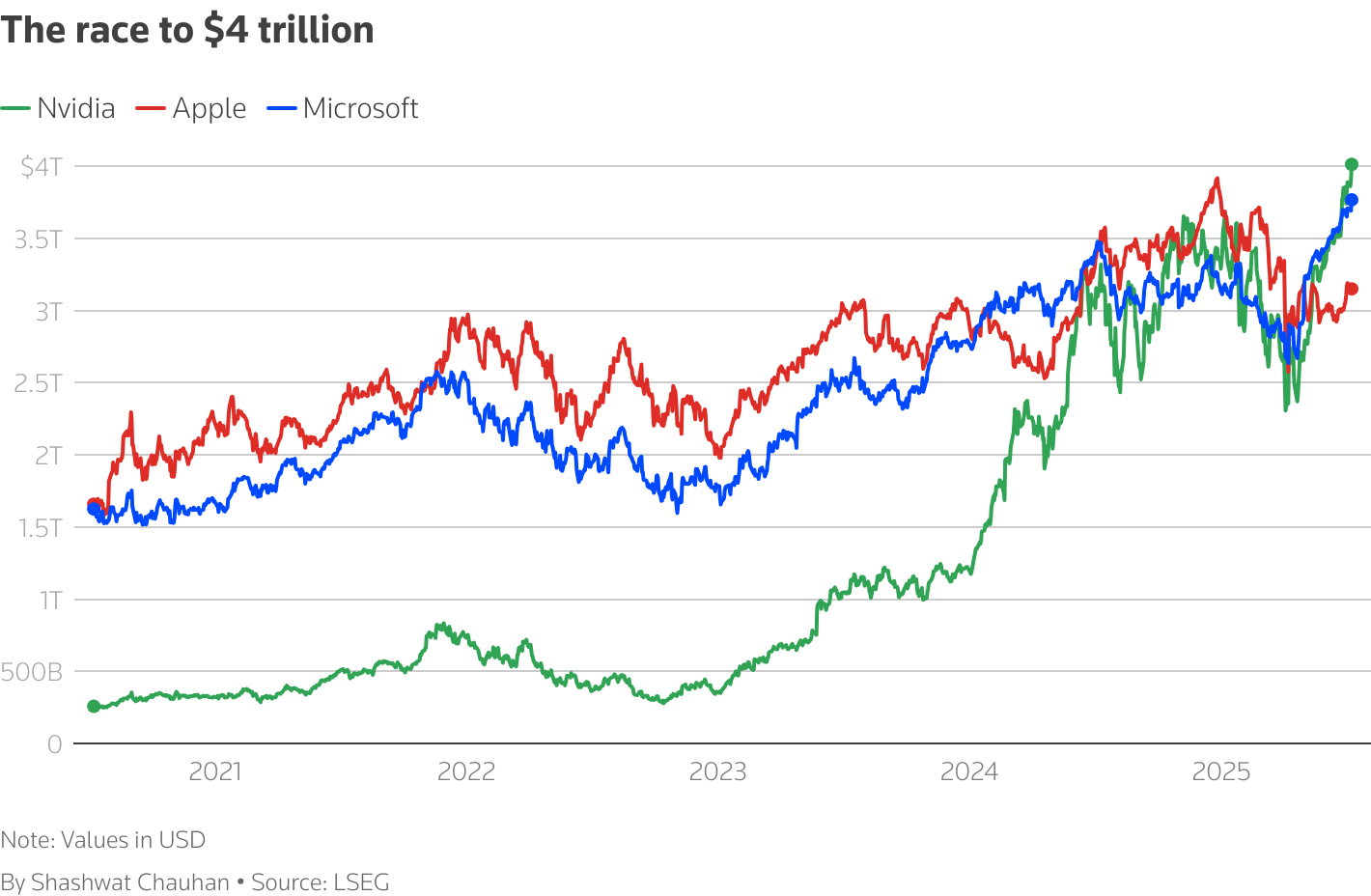
We've accidentally created a situation where three engineers' napkin sketch from 1993 now controls how fast humanity develops artificial intelligence. That's... that's kind of terrifying, right?
New Cold War?
Of course, nobody else is just sitting around watching NVIDIA dominate everything. The biggest tech companies in the world are spending billions trying to break NVIDIA's stranglehold.
Chinese AI company called DeepSeek released an AI model that was basically as good as ChatGPT, but it cost only $6 million to build instead of hundreds of millions. They did it using older, cheaper NVIDIA chips and really smart software optimization.
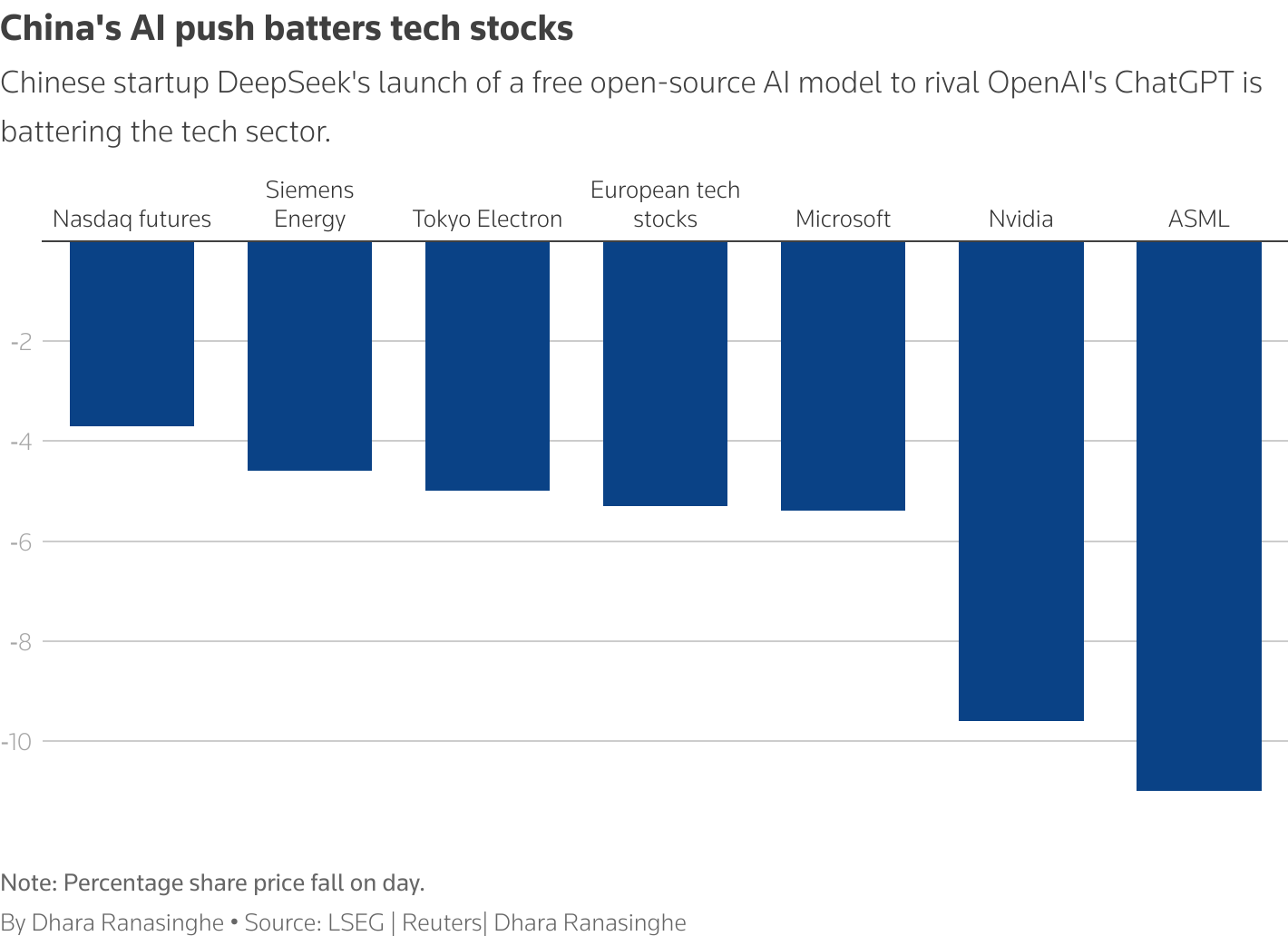
NVIDIA's stock dropped 20% in one day when DeepSeek announced their results. Why? Because DeepSeek proved that maybe you don't need the most expensive, cutting-edge hardware to build world-class AI. Maybe smart software can substitute for brute-force computing power.
This is the classic innovator's dilemma playing out in real time. NVIDIA has been selling picks and shovels to AI gold miners, charging premium prices because their tools were the only ones that worked. But what happens when someone figures out how to mine gold with a different tool entirely?
- - -
Here's where things get really complicated. NVIDIA isn't just a tech company anymore - they're a geopolitical weapon.
The US government has banned NVIDIA from selling their best chips to China. China used to be 95% of NVIDIA's international market. Now it's down to 50%. We're basically using AI chips as economic sanctions.
But here's the thing about trying to control technology - it's like trying to hold water in your hands. The more pressure you apply, the more it leaks through your fingers.
China is responding by building their own AI chip industry. They're investing billions in domestic alternatives. They're proving with companies like DeepSeek that maybe they don't need American hardware to compete in AI.
And NVIDIA is stuck in the middle of this tech cold war, trying to maintain relationships with customers on both sides while complying with ever-changing export restrictions.
Jensen Huang has basically said that the future of AI will be built in "AI factories" - massive data centers that produce intelligence like electricity plants produce power. But who controls those factories? Which countries get access to the most advanced AI infrastructure? These aren't just business decisions anymore - they're questions of national security and global power.
Three Futures. One Unknown.
So where does this all lead? I see three possible futures, and honestly, I'm not sure which one scares me more.
Scenario One: NVIDIA Wins Everything
NVIDIA continues to dominate AI infrastructure, becomes even more powerful, and essentially controls the pace of human technological development. They become like the oil companies of the 20th century - so critical to everything that governments can't afford to regulate them too heavily. In this world, three engineers from 1993 end up determining how fast we develop artificial general intelligence, how quickly we automate jobs, how rapidly we transform society.
Scenario Two: The Great Unbundling
Competition finally breaks NVIDIA's monopoly. Google, Amazon, Microsoft, and a bunch of startups develop alternative AI architectures that work just as well but cost way less. The AI revolution democratizes. more countries and companies can participate, and we avoid the single-point-of-failure problem. This is probably the healthiest outcome for humanity, but it might slow down AI development in the short term.
Scenario Three: The Software Revolution
Companies like DeepSeek prove that most AI applications don't actually need cutting-edge hardware. Software optimization, better algorithms, and smarter approaches to training AI models make expensive specialized chips less important. In this world, NVIDIA's dominance crumbles not because of competition, but because their product becomes less necessary.
A Final Thought That Keeps Me Up at Night
Here's what I keep thinking about: we're living through the most important technological transition in human history, and it's being controlled by one company that got here almost by accident.
NVIDIA didn't set out to control the future of artificial intelligence. They wanted to make better graphics cards for gamers. They happened to bet on parallel processing when everyone else was betting on serial processing. They happened to build a developer ecosystem that turned out to be perfect for AI. They happened to be in the right place at the right time when machine learning exploded.
But now, because of a series of strategic decisions and lucky breaks, they essentially control how fast humanity develops artificial intelligence. That's an incredible amount of power for any organization to have.
And here's the kicker - they might be completely wrong about what comes next. What if the future of AI doesn't require massive, expensive data centers? What if edge computing takes over? What if quantum computers make traditional processors obsolete? What if we figure out how to run AI on completely different architectures?
NVIDIA has built their entire strategy around the assumption that AI will require more and more computational power, more and more specialized chips, more and more of their infrastructure. But what if that assumption is wrong?
The company that accidentally became the most powerful corporation on Earth by betting on parallel processing when everyone else was betting on serial processing... what happens if they're about to make the same mistake in reverse?
That's the question that keeps me up at night. Because in a world that's about to be run by artificial intelligence, whoever controls the infrastructure controls everything.
And right now, that's three engineers who sketched their ideas on a napkin in a California diner in 1993.
I was super hooked while reading this, Thanks for posting!